
Starting your first vegetable garden can feel like a big project. There are choices about location, soil, layout, and what to plant. That is enough to make many beginners second-guess the whole idea before they even begin.
The good news is that you do not need a perfect yard, a shed full of tools, or years of experience. A successful garden starts with a simple plan and a willingness to learn as you go. When you focus on a few basics first, the process becomes much more manageable.
A beginner garden works best when it is small, practical, and easy to maintain. Instead of trying to grow everything at once, start with a setup that gives you quick wins. That early success builds confidence and makes it easier to stick with the habit.
Begin With the Right Garden Location
The best place for a vegetable garden is usually the spot that gets the most direct sun. Most common vegetables need around six to eight hours of sunlight each day to grow well. Without enough light, plants often stay weak, grow slowly, or produce very little.
A common mistake is choosing a garden spot based only on how it looks in the morning. A shady corner at breakfast time may be bright and sunny by the afternoon. Before you commit to a location, check your yard at different times of day and pay close attention to where the sunlight actually falls.
What to look for in a good garden spot
A beginner-friendly location usually has these features:
- Plenty of direct sunlight
- Easy access to water
- Good drainage after rain
- Enough room to move around the bed
- Visibility from the house or patio
A garden that is easy to see is often easier to maintain. When your plants are in view, you are more likely to notice dry soil, weeds, pest issues, or vegetables ready to harvest.
Choose a Setup You Can Manage
When people picture a vegetable garden, they often imagine long rows and a large growing space. That can work, but it is not the easiest path for a beginner. Starting small is usually the smarter choice.
Raised beds are one of the most beginner-friendly options because they simplify several problems at once. You control the soil, drainage is usually better, and weeds are easier to manage than in many in-ground spaces. The structure also makes the garden feel organized from day one.
A single 4x8-foot raised bed is enough for many first-time gardeners. That size gives you room to grow a useful mix of vegetables without creating more work than you can handle. For many households, one bed can produce enough for regular salads, simple meals, and side dishes during the season.
Why raised beds work well for beginners
Raised beds offer several practical advantages:
- Soil quality is easier to control
- The space stays more defined and tidy
- Weeding takes less time
- Water drains more evenly
- Plant spacing is easier to plan
If your budget is limited, you do not need an elaborate setup. One well-built bed with quality soil is more useful than a larger garden filled with poor soil and hard-to-manage plants.
Focus on Easy Vegetables First
One of the fastest ways to get overwhelmed is to plant too many crops at once. A long seed catalog can make everything sound appealing, but first-time gardeners benefit from keeping things simple.
Start with five to seven vegetables that are known for being forgiving and productive. This gives you variety without turning your garden into a full-time project. It also makes watering, feeding, and tracking progress much easier.
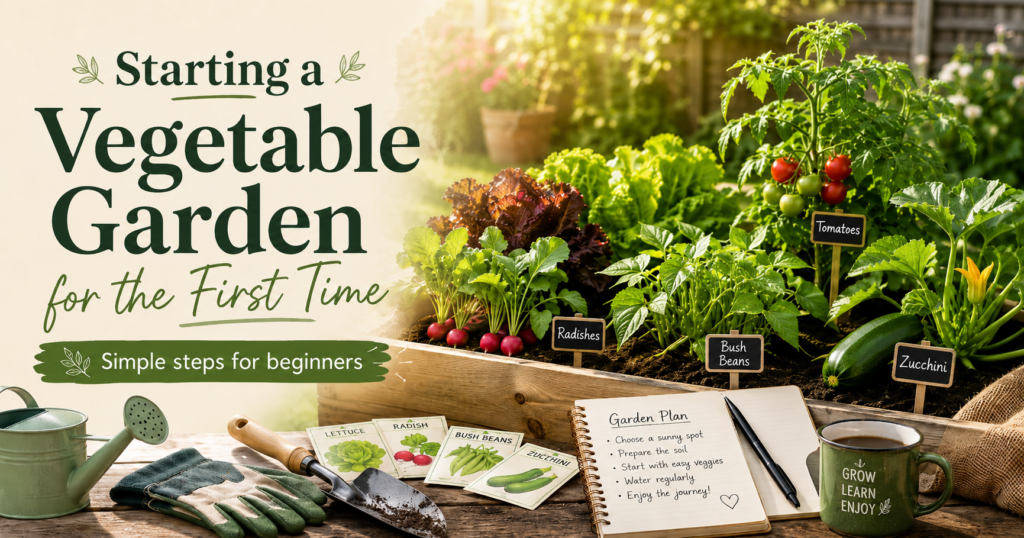
Good beginner choices often include:
- Tomatoes
- Lettuce
- Radishes
- Bush beans
- Zucchini
These crops are popular for a reason. They tend to respond well to regular care, and several of them grow quickly enough to keep you motivated. Quick harvests help new gardeners stay engaged, especially early in the season.
How to choose what to grow
Pick vegetables based on three simple questions:
- What do you actually like to eat?
- What grows well in your season?
- What fits your space?
There is no benefit in growing vegetables your household will ignore. A small garden should focus on crops that are useful, realistic, and satisfying to harvest.
Build the Garden Around Great Soil
If there is one area worth extra attention, it is the soil. Many beginner problems trace back to poor growing conditions below the surface. When soil drains badly or lacks organic matter, plants struggle long before the gardener understands why.
Good soil helps vegetables grow faster, produce more, and resist stress more effectively. It also makes your work easier because healthy plants are generally simpler to maintain.
For a raised bed, a practical starter mix includes:
- Topsoil for structure
- Compost for nutrients and organic matter
- Perlite or coarse sand for drainage
This kind of mix creates a growing environment that holds enough moisture while still allowing roots to breathe. That balance matters more than many beginners realize.
Why soil quality matters so much
Plants grown in rich, well-draining soil are often:
- More productive
- Easier to water correctly
- Less prone to stress
- Better able to handle disease pressure
- Stronger from the beginning
It is tempting to save money on soil, but weak soil often creates more frustration than any other part of the garden.
Keep Notes as You Learn
A simple garden journal may not sound exciting, but it becomes one of the most useful tools you own. Every season teaches you something, and written notes help you keep those lessons instead of losing them.
Record details such as:
- Planting dates
- Vegetable varieties
- Weather patterns
- Growth progress
- Harvest timing
- Problems you notice
Over time, this record becomes your personal guide. You will start to see patterns in what works well in your yard and what needs adjusting. That is how beginner gardeners turn into confident growers.